- → You redesign when the problem is structural: the site no longer says what you do, generates no enquiries, or can't be updated.
- → Our method: understand the market before designing. Positioning, then design, then development.
- → No off-the-shelf theme, no pretty mock-up that never ships: custom design and development, by the same team.
- → Timeline and budget are set at scoping, on the real scope: templates, content, integrations.
- → The thing everyone forgets: redirects. That's where redesigns lose their traffic.
When a redesign is truly warranted
Redesigning a site is expensive and ties up your teams. Before launching the project, the real question is whether the problem is cosmetic or structural. A redesign is justified when you tick several of these boxes:
- The site no longer says what you do. Your offer has moved on, but the site is stuck on the version from three years ago. Visitors get it wrong, or don't get it at all.
- It generates no enquiries. Some traffic, maybe, but no forms filled, no calls. It informs instead of converting.
- It's slow or poorly indexed. Pages that take four seconds to load, a structure Google can't read, no page ranking for your core queries.
- Nobody can update it. Changing so much as a comma means going through a developer, so nothing ever changes.
- It fails on mobile. That's where most of your visitors first meet you.
- It doesn't look like who you are. The level of service you sell isn't the one the site suggests.
If, on the other hand, the positioning is clear, the structure sound and only the design has aged, don't redesign: reworking the design and key pages costs a fraction of the price. We say so when that's the case.
Starting from scratch instead? Then your project is website creation: the same method, with no existing site to carry over.
Our 5-step method
We work on a website the way we work on a business tool: by getting under the skin of the subject first. Not a pixel is placed before we understand what you sell, to whom, and against whom.
Understand the market and the current journey
Interviews with your sales teams, a close read of your competitors, analysis of the audience and of the pages that already work. We identify what a visitor must understand, in what order, and what makes them drop off today.
Positioning, messaging and sitemap
What you say first, the promise, the proof, the objections to address. From that we derive the sitemap and the content of every page before talking design. This is the step that decides everything else.
Custom design
An art direction that belongs to your brand, rolled out across templates. No off-the-shelf theme repainted: that's what produces interchangeable sites that later become impossible to build on.
Development, technical SEO and production
Built by the people who designed it: fast pages, clean markup, structured data, redirects in place. The site ships to production with analytics already wired in.
Measurement and iterations
We watch what visitors actually do in the first weeks: where they land, where they leave, what triggers an enquiry. We fix the pages that don't keep their promise.
What you receive
A redesign is judged by what belongs to you at the end. With us: everything. The opposite of a site rented on an agency's platform.
Timeline and pricing
There is no standard price for a redesign, and we're wary of anyone who advertises one. The budget depends on four things, and almost nothing else:
- The number of templates to design. Five pages sharing two templates don't cost the same as five entirely different pages.
- The volume of content to produce or rewrite, and who writes it: you, us, or both.
- The integrations: forms, booking, CRM, client portal, integrated business tool.
- Who will run the site afterwards: your teams, us on subscription, or both. That also decides the technical choice (CMS or custom).
On timing, the pattern is consistent: the limiting factor is almost never development, it's your teams' availability for workshops and how fast content gets approved. The timeline is set at scoping, milestone by milestone.
In practice: a 30-minute call about the current site and the goal, then a firm proposal, scope and timeline included. And if our conclusion is that a touch-up is enough, that's what the proposal will say.
After launch: the subscription
A site isn't finished the day it ships: it lives. Content moves with your business, search visibility, on Google and in AI answers alike, is built over time, dependencies need updating, and the traffic tells you what needs fixing. That's why a redesign can carry on with us as a monthly subscription:
- Hosting and monitoring. The site stays fast, backed up, up to date and monitored, without you having to think about it.
- Improvements as you go. New pages, adjustments, small features: the site keeps pace with your business instead of falling three years behind all at once.
- Continuous content, SEO and GEO. Being found and cited is long-haul work, not a one-off setup. We run it together with the marketing strategy when it's part of the picture.
- A regular review of the numbers. What visitors do, what triggers enquiries, what we improve next month.
The site remains entirely yours, subscription or not: it belongs to you; we just look after it. Scope and pace are set at scoping, like everything else.
The number-one trap: losing your rankings
It's the classic redesign accident. The new site goes live, the old addresses no longer exist, and traffic collapses overnight. Google then takes months to piece back together what you had built up over years.
We use the opportunity to tackle the question that now matters as much as Google: being cited in AI answers. Your prospects now put their questions to ChatGPT or Perplexity, which cite precise, well-structured pages. It's editorial and technical work best done at redesign time, not three years later. We detail it in our marketing strategy consulting offer.
Let's talk about your redesign in 30 minutes
You show us the current site and tell us what it should produce. We tell you what we'd redo, what we'd keep, in what order and on what budget.
Book a callAn example: Pro Lenser
Pro Lenser is a talent agency that crews film shoots. Their craft is judged on image, and their site didn't show it. We designed the showcase site end to end, in a cinematic style that echoes their sets, then a custom application with AI built in to take on their day-to-day operations.
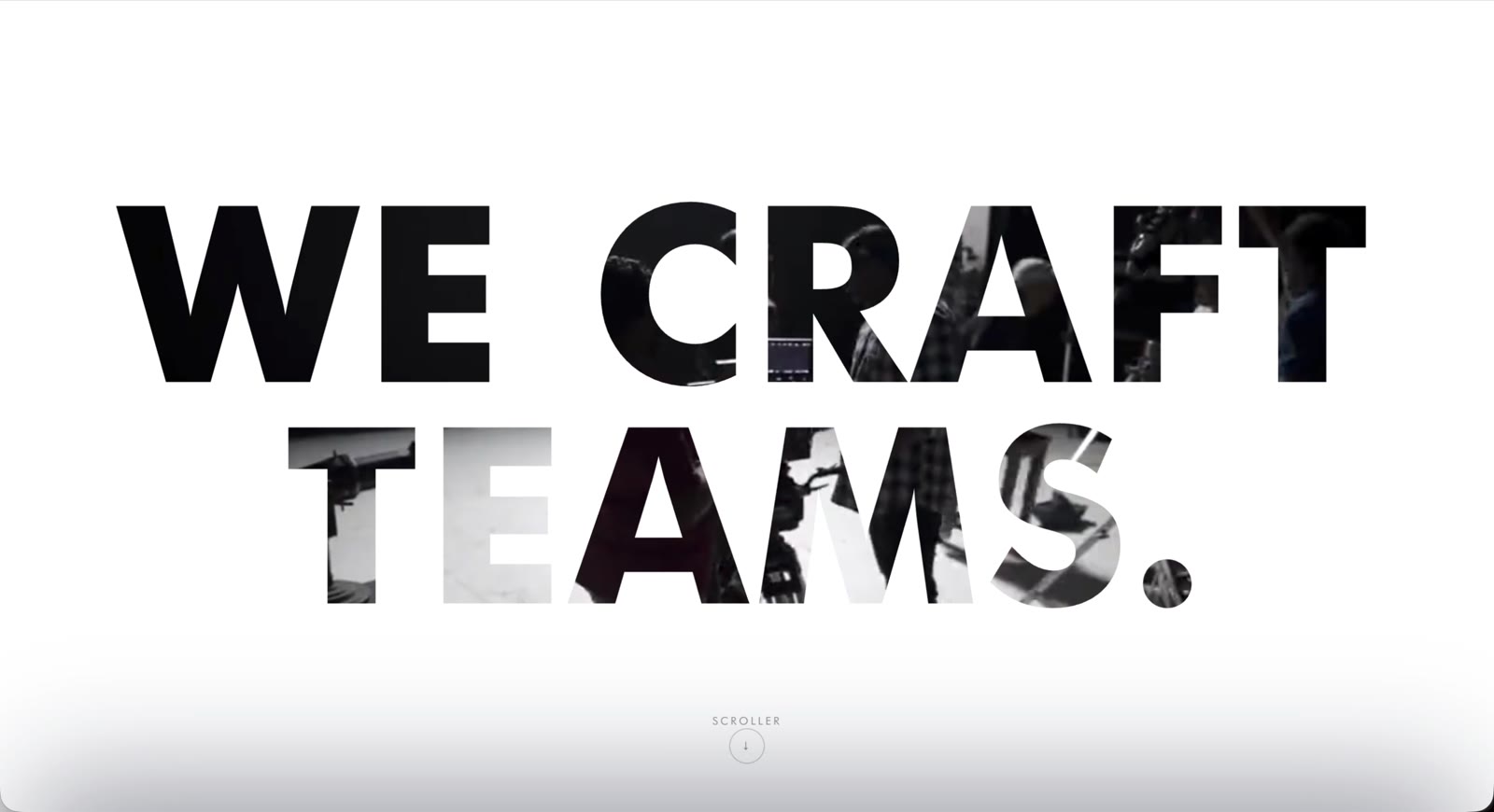
A cinematic showcase site and an in-house AI application
Designed end to end: positioning, art direction, development, production, then the internal tool that goes with it.
View the case studyFrequently asked questions
How much does a website redesign cost?
There is no standard price: the budget depends on the number of templates to design, the volume of content to produce or rewrite, the integrations required, and who will run the site afterwards. We quote after a free 30-minute call, at the end of which you receive a firm proposal, even if our recommendation is not to redesign.
How long does a website redesign take?
From a few weeks for a brochure site to a few months for a full redesign with content production. The limiting factor is rarely development: it's your teams' availability for workshops and how fast content gets approved. The precise timeline is set at scoping, milestone by milestone.
When should you redesign rather than touch up?
Redesign if the problem is structural: the site no longer says what you do, generates no enquiries, is slow or poorly indexed, can't be updated, or fails on mobile. If the positioning and structure are sound and only the design has aged, a touch-up costs a fraction of the price, and we'll tell you so.
Will a redesign cost you your existing search rankings?
It can, if nobody takes care of it: it's the number-one cause of traffic drops after a redesign. We map the URLs and pages that generate traffic before touching anything, set up the matching 301 redirects, keep the content that performs, and monitor indexing after launch.
Do you use WordPress or custom development?
It depends on who will run the site. If your teams need to publish on their own every day, a CMS makes sense. If the site must be fast, distinctive and carry specific features, we build custom. We never start from an off-the-shelf theme and repaint it.
Do we own the site at the end?
Yes, entirely: the design files, the documented code, the content and the login details are in your name: the opposite of a rented site. And to keep it alive, our subscription covers hosting, maintenance, ongoing improvements and continuous search work: the site belongs to you; we just look after it.
What happens after launch?
That's when the site's real life begins: content that keeps pace with your business, search visibility built over time, security updates, measurement of what converts. Our monthly subscription covers hosting, monitoring, ongoing improvements and a regular review of the numbers. The scope is set at scoping.
About pricing. We don't publish a price list: every redesign is quoted after scoping, on its real scope, and the proposal is firm. The projects described on this page (including Pro Lenser) were run end to end, positioning and development included, with no off-the-shelf theme.